Garry Grant is a New York City-based artist celebrated for his expansive, large-scale abstract works created on multi-canvas compositions and intricately layered wood panels. A Detroit native, Grant studied at the College for Creative Studies, where he began forging a path that blends fine art with the meticulous craft of master gilding. Rooted in a deep fascination with ancient civilizations, Grant's work explores the resonance between historical memory and contemporary abstraction. Over more than two decades, his practice has evolved into a compelling fusion of abstraction, material history, and narrative storytelling.
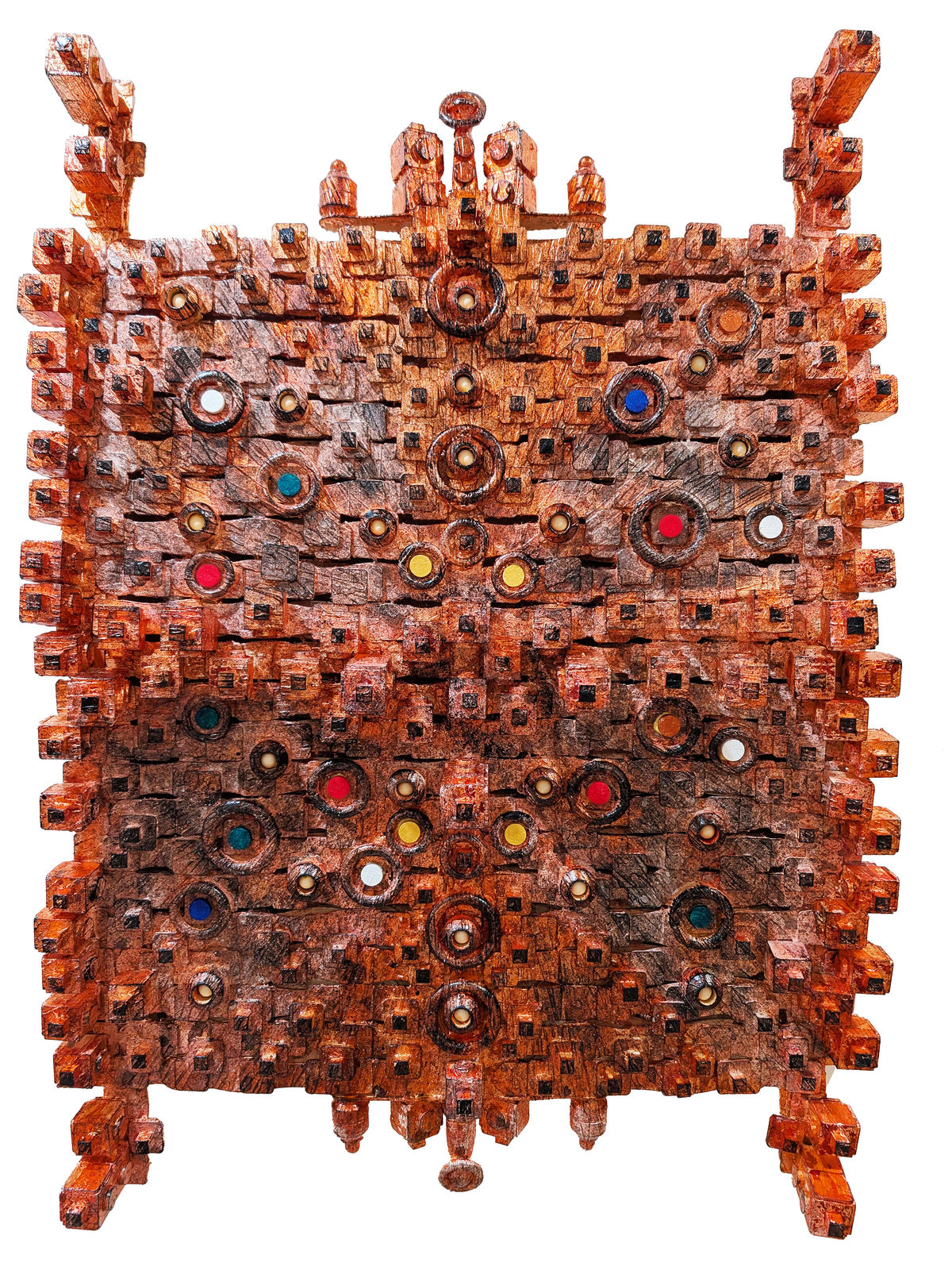
Reimagines the Lukasa memory board of the Luba people as a contemporary mnemonic device — an interface where ancestral knowledge is preserved, activated, and projected forward. Memory as an active, living force: the past, fully realized, is a technology for the future.
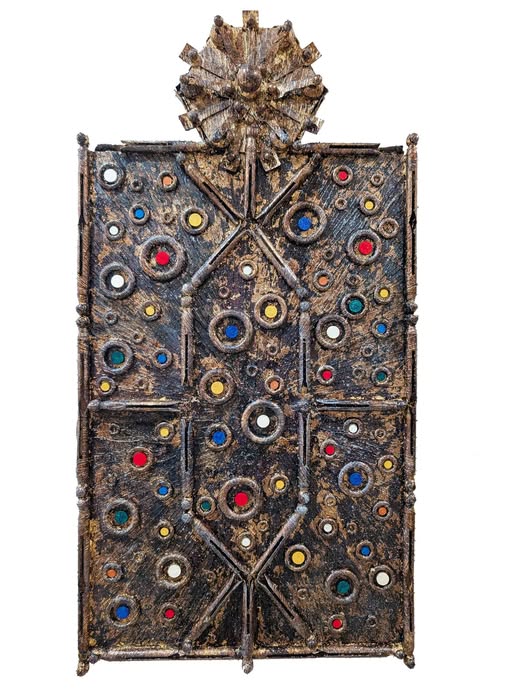
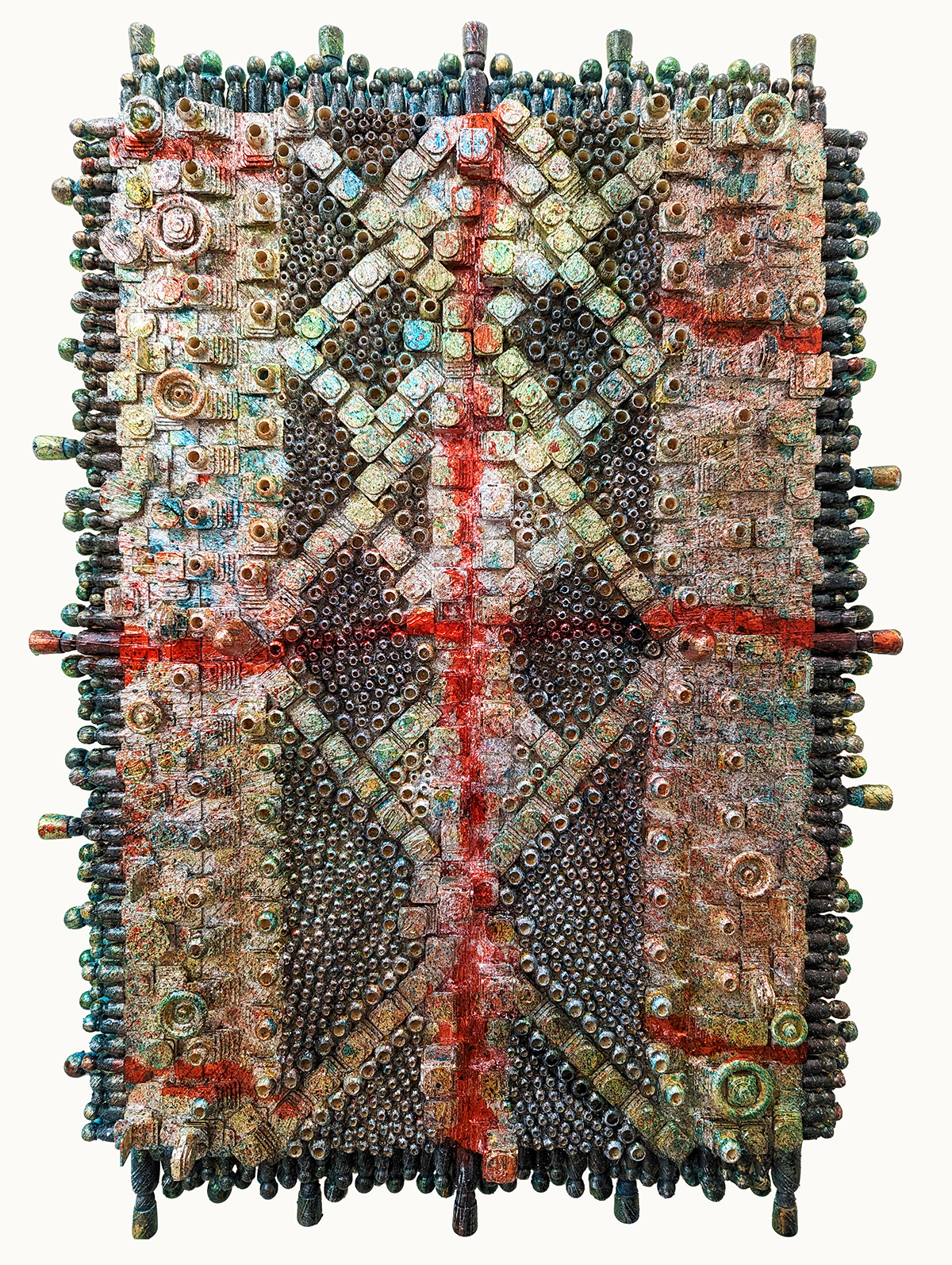
The third Lukasa board — an ancestral data recovery protocol. Colored nodes and crossing channels map knowledge held in the body rather than the cloud: each ring a life, each crossing a transmission, the memory board as the original database.
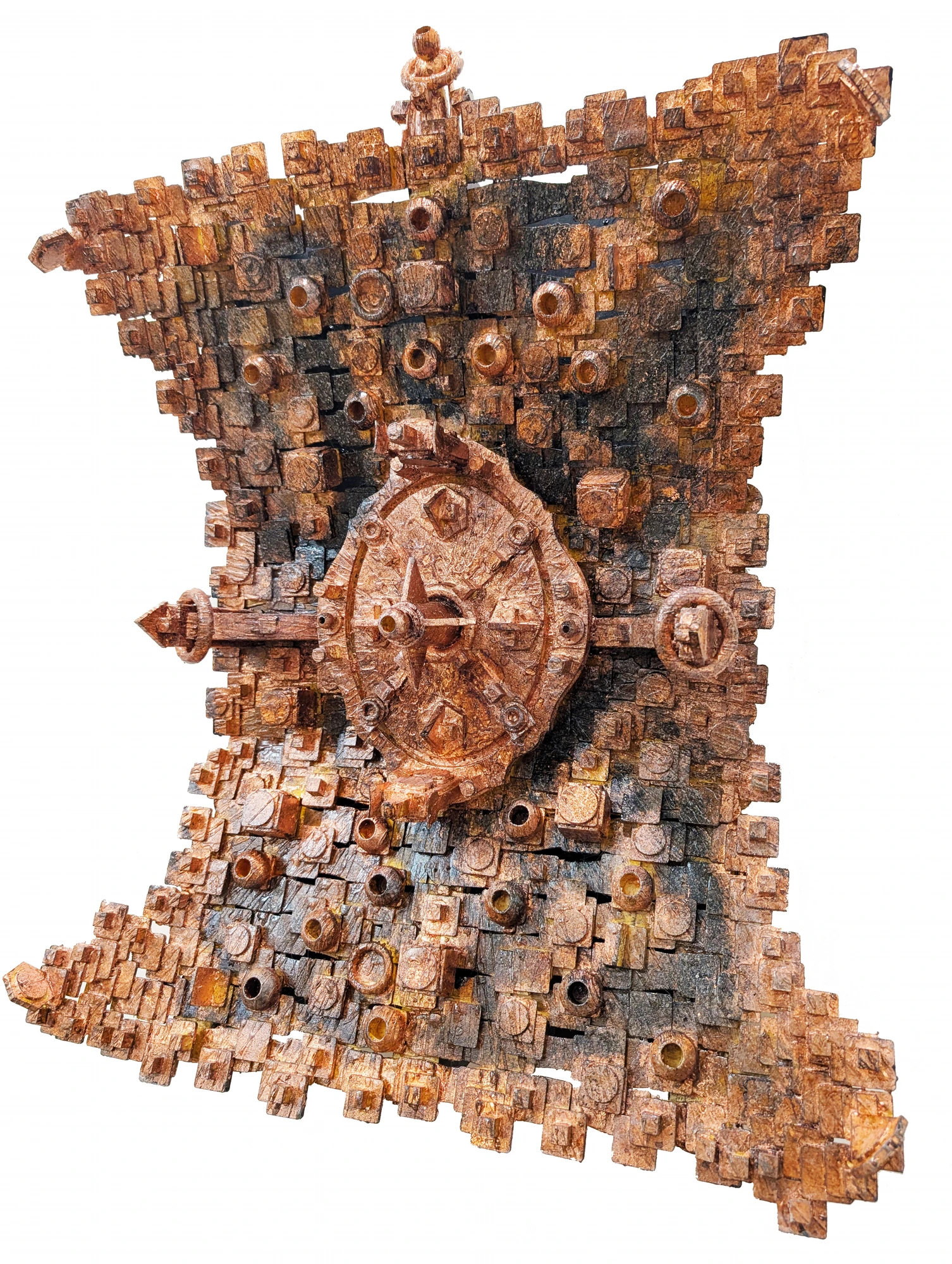
The first of the Lukasa boards — the code of the ancestors. A copper field shaped like the kingdoms it remembers, its central dial reading memory like time: the original interface, knowledge you hold in your hands.
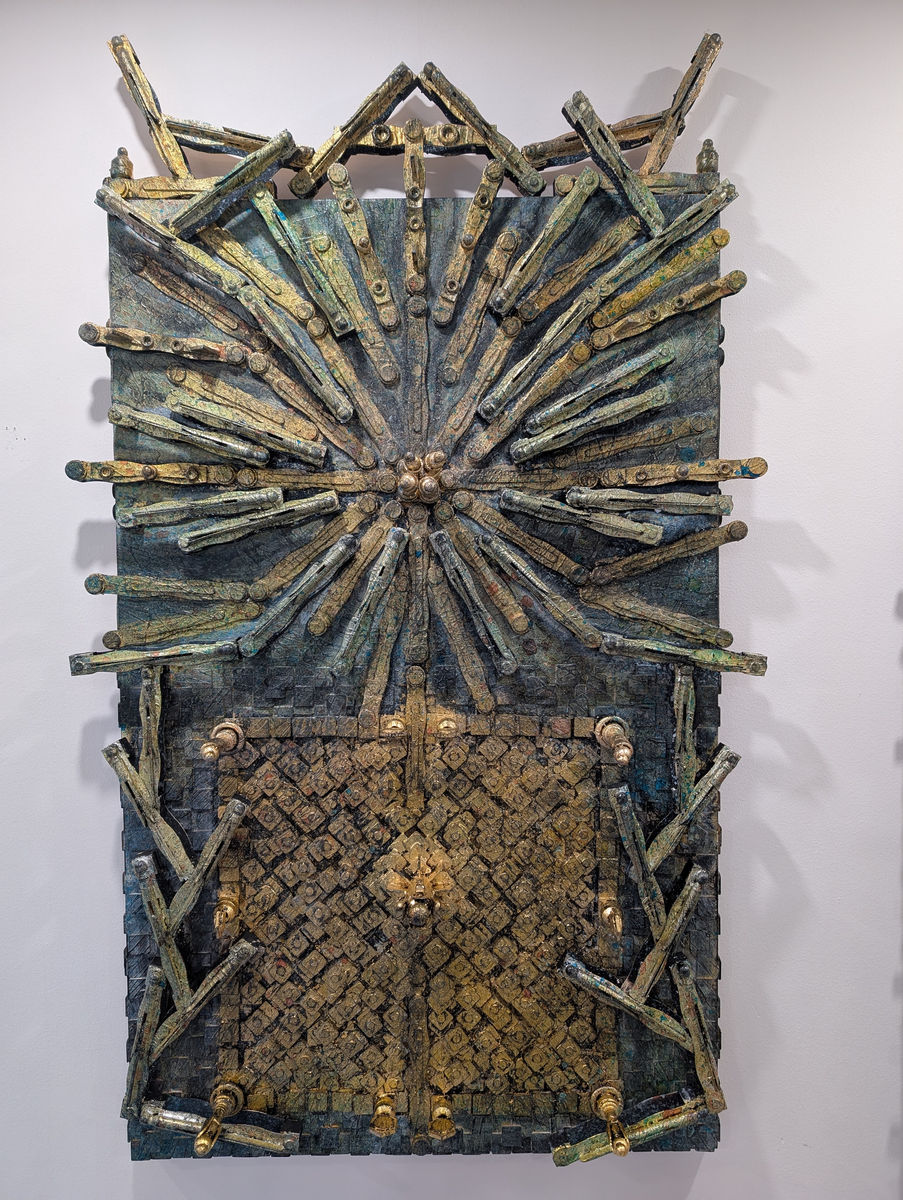
A portal radiating between two histories — the Doorway of No Return that took, and the Doorway of Return that brings home. Gilded rays burst from a patinated ground while below, the door stands open: hope built by hand, element by element.
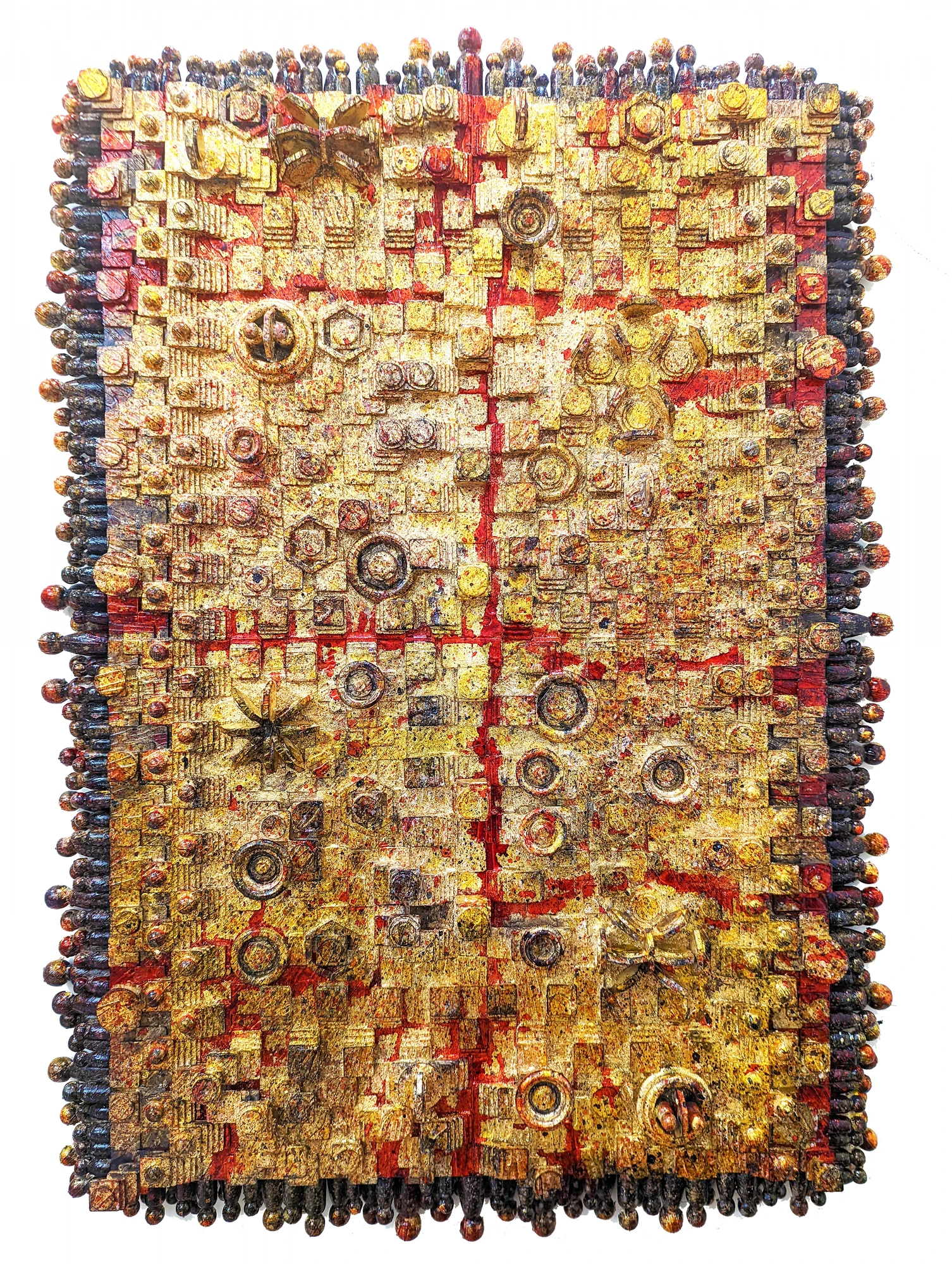
A reassessment of 1897 — the year the Benin Empire fell and its bronzes were scattered across the world. Countless gilded elements, ringed by a dark studded border, reassemble what was taken: memory returning as monument.
Benin City and the red gold — palm oil, the trade that fed empires and the battles fought over it. Red routes cross a pale weathered field like paths of extraction and return, each stud a life along the way.
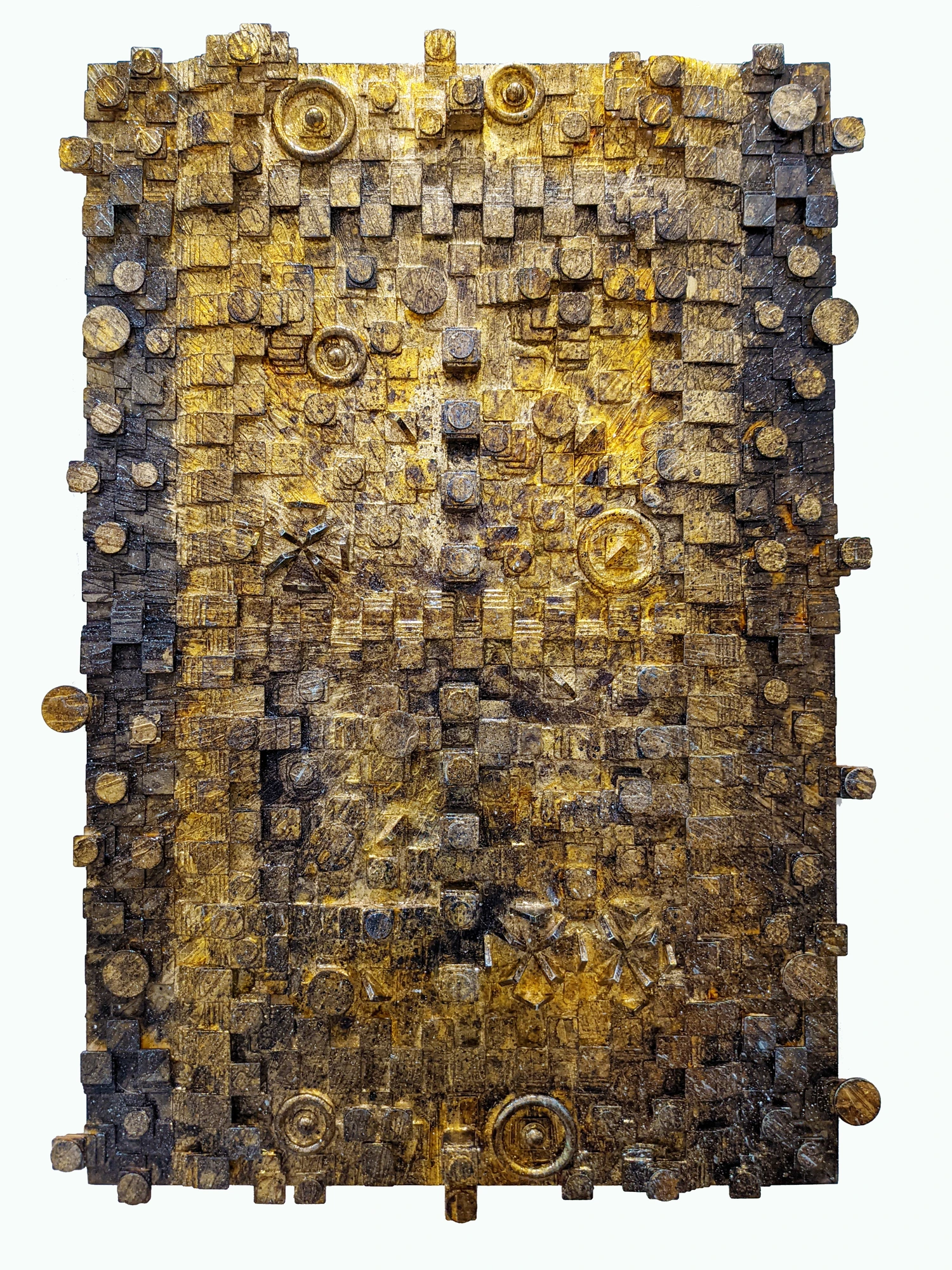
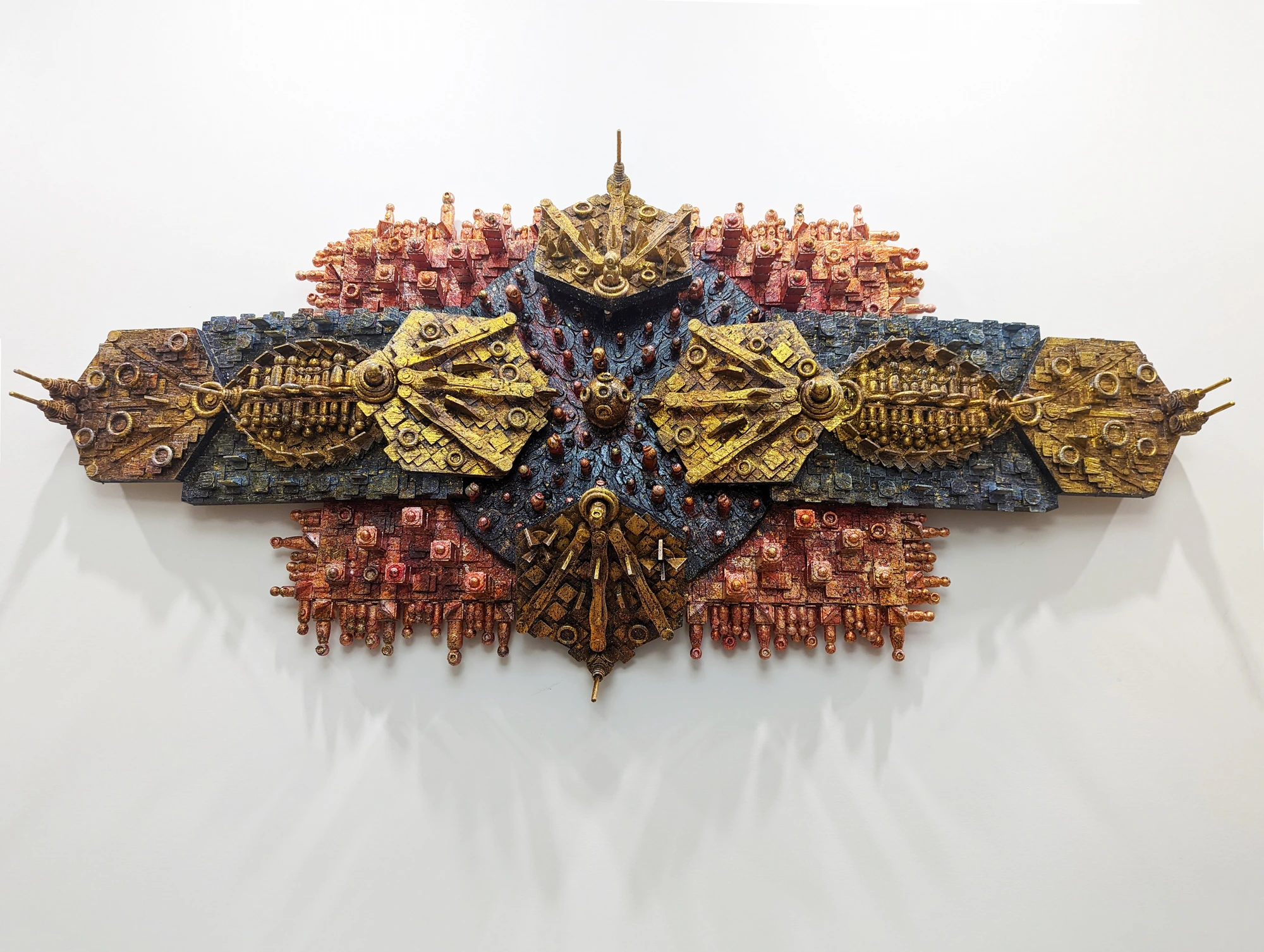
Within the walls, the inner court — a dense gold relief of gears, dials and circles pressed into a darkened border: the machinery of a kingdom that ran on order, craft and bronze. The second of the High Technology works.
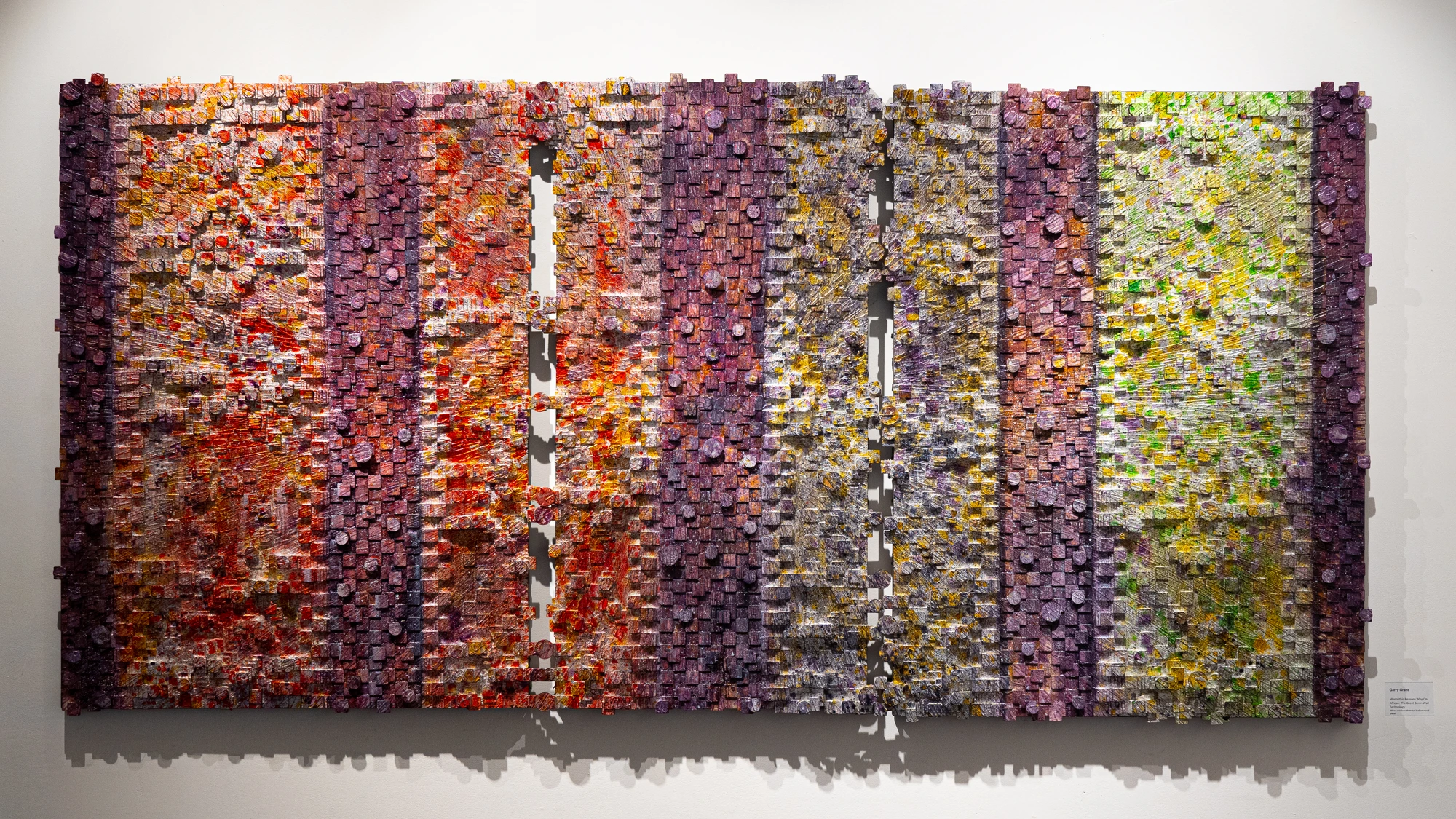
The great walls of Benin — among the largest man-made earthworks in history — rebuilt as high technology: a hundred-inch triptych in bands of crimson, gold and living green, its hand-set elements reading like circuitry. The wall as circuit, the circuit as memory.
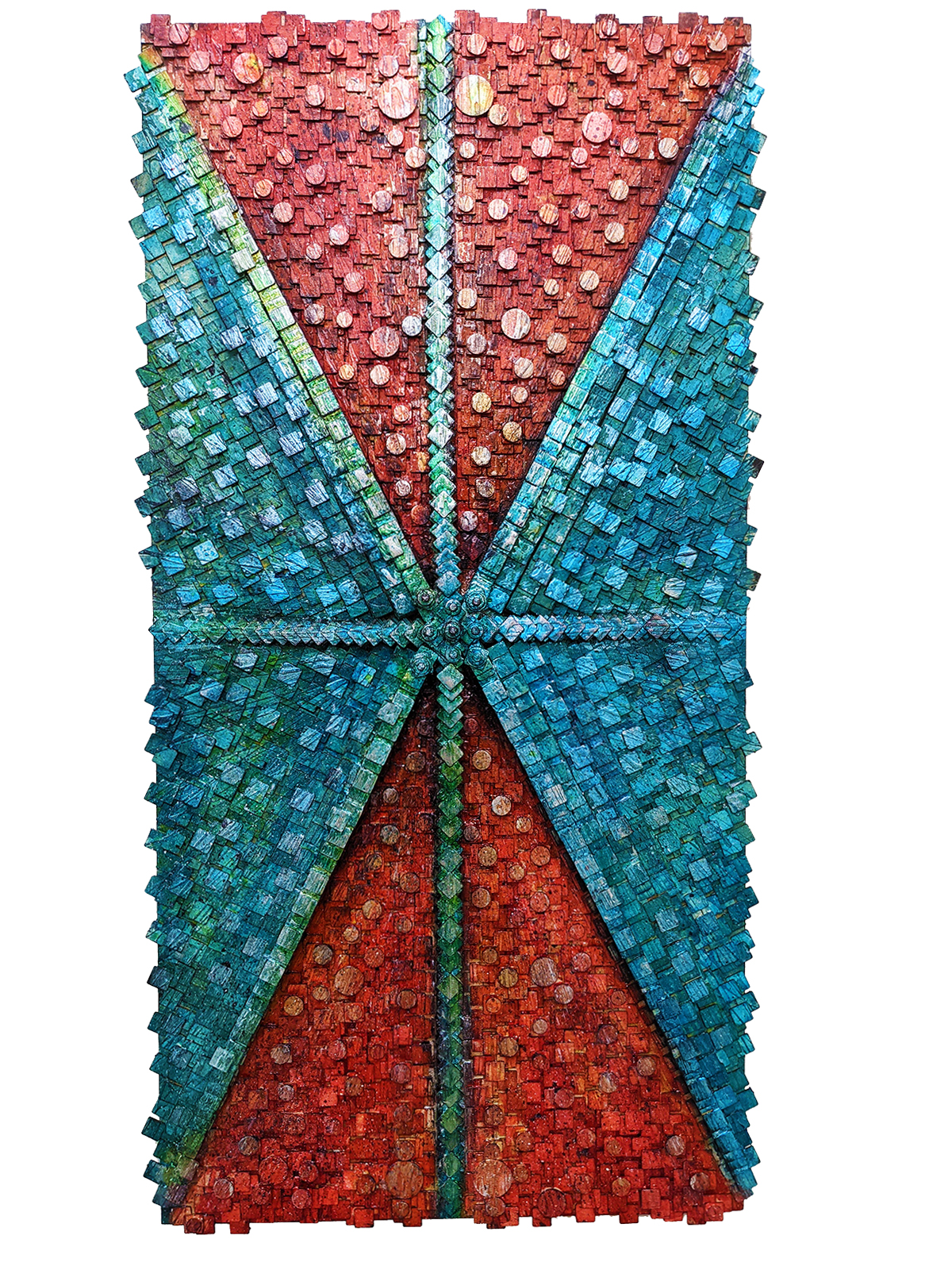
The pyramid as engine, not tomb. In copper red and patinated blue, thousands of hand-set elements ascend like the circuitry of an ancient city — Africa's civilizations read as high technology, a knowledge system built to endure.
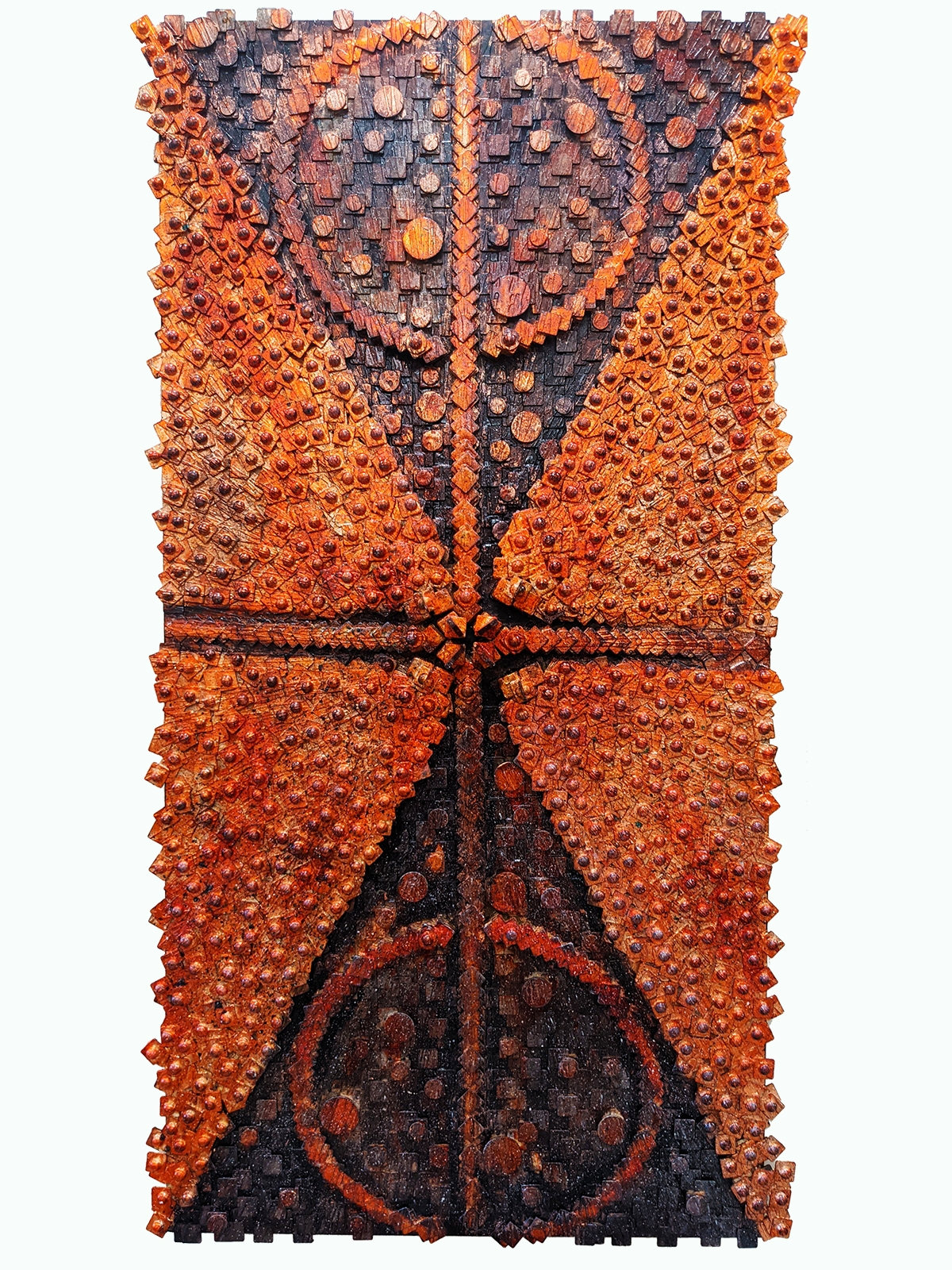
The second Pyramid City — the same ancient circuitry rendered in burnt orange and umber. Two towers, one knowledge: the paired doorways of technology and tradition, each element placed by hand like stone upon stone.
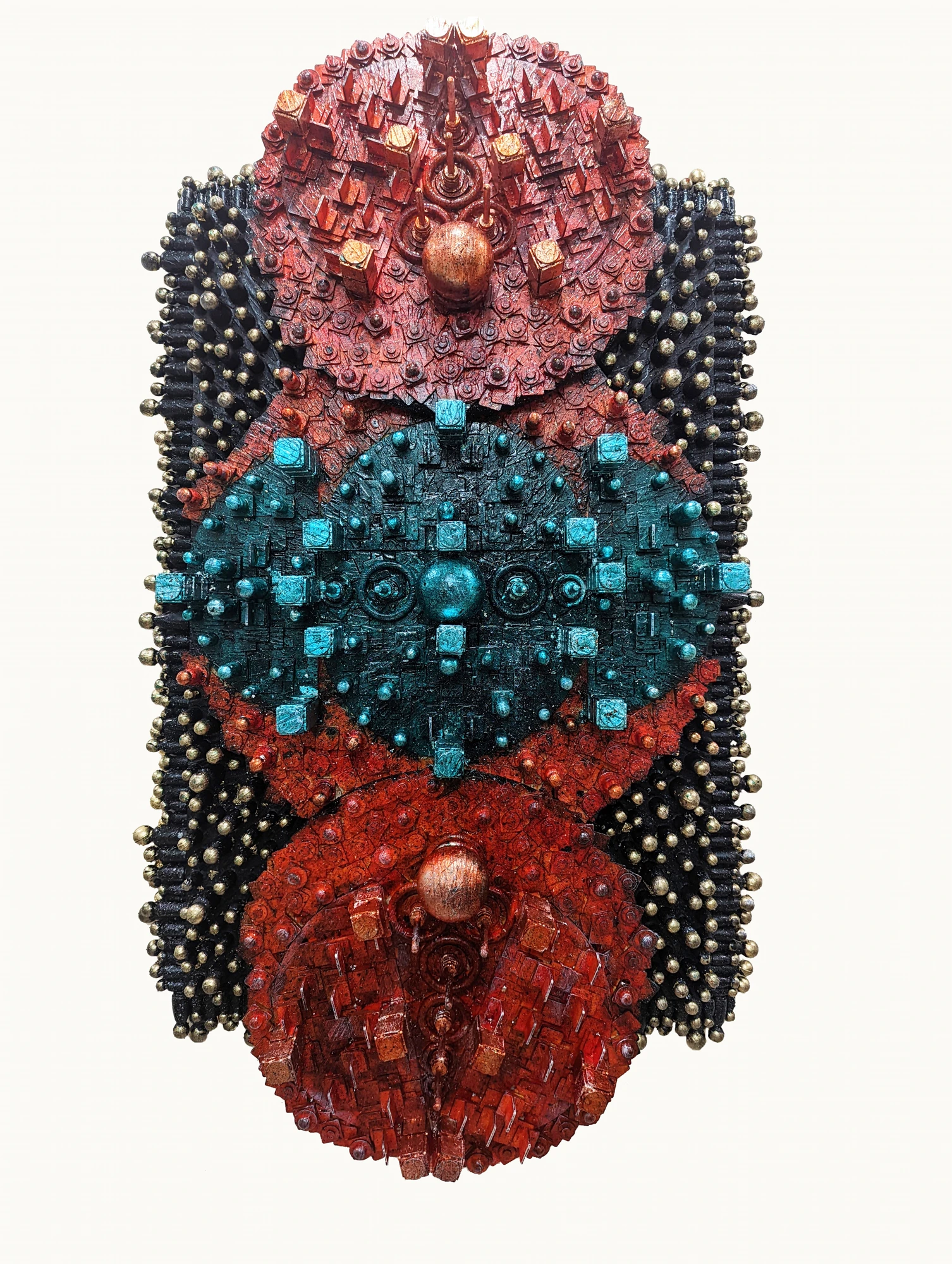
The first of the Black Civilizations Series — a gathering of presences in red oxide, turquoise and studded black. Three circular forms rise like ancestors assembled in council, while metal leaf catches the light across a surface dense with memory.
A temple form raised in gold and ember red, dedicated to the forgotten enslaved of the trans-Atlantic crossing and to victims of gun violence. Its cruciform silhouette stands as monument and memorial — a dense surface built from countless individual elements, each one a life. Views include the work in progress in the studio.
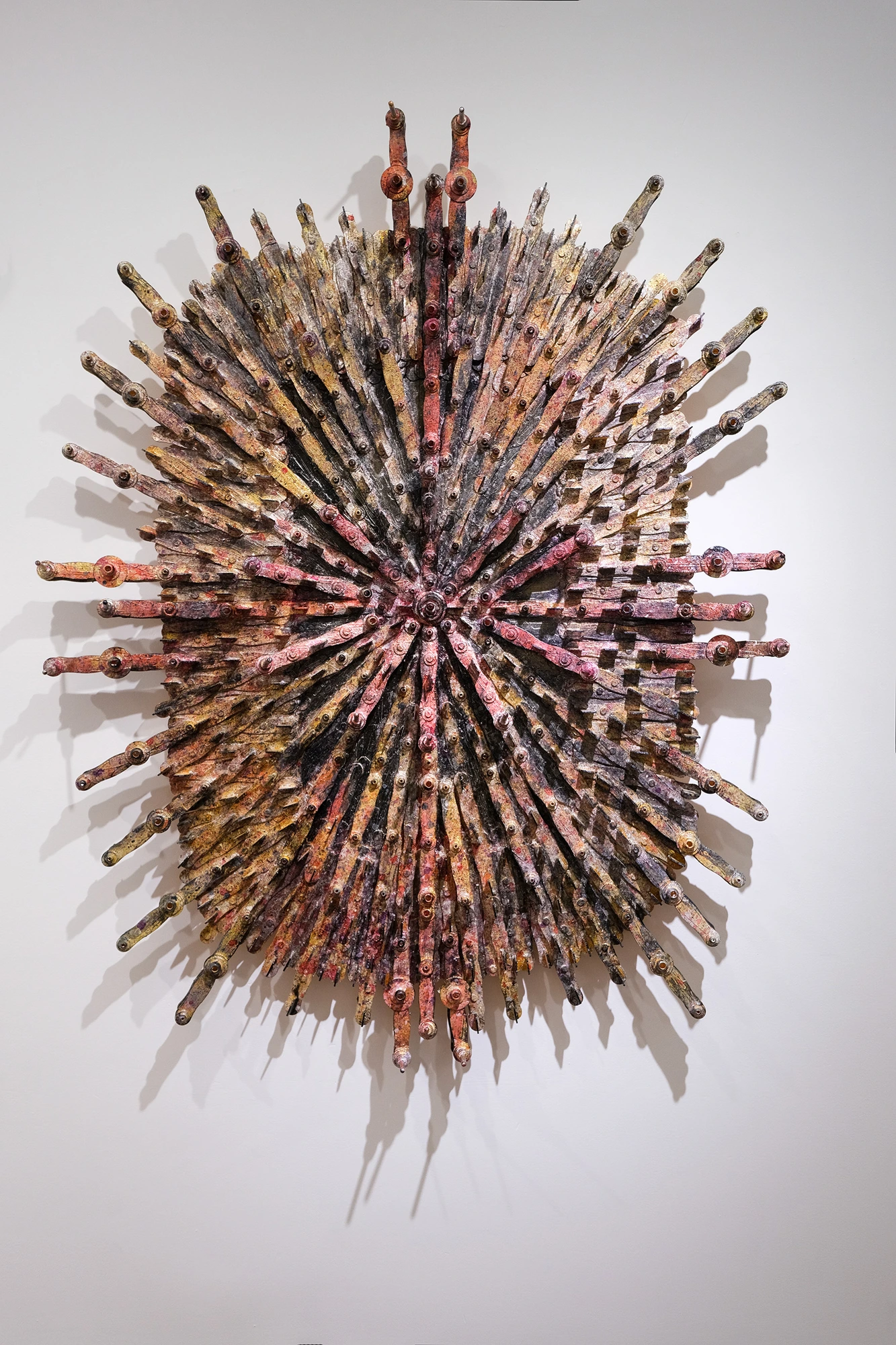
A radiating constellation of gilded and patinated elements, evoking the great amphitheater of El Jem — every strut and rivet turning outward from a single heart, like tiers of stone around an arena. The criterion revealed: civilization measured not by conquest, but by what it builds to gather people together.
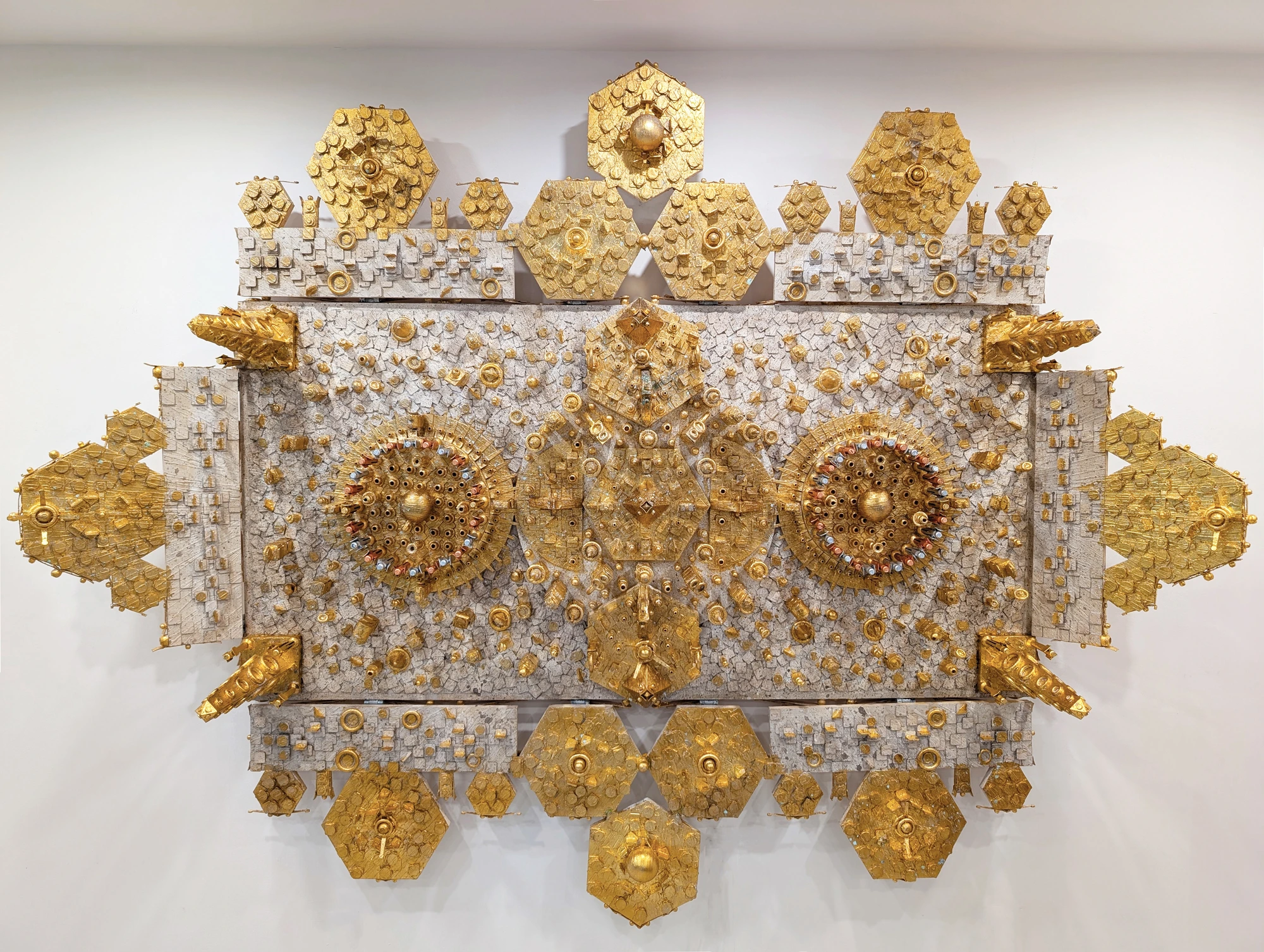
Alkebulan — the ancient name for Africa. A sarcophagus in gold and ivory: gilded hexagonal and circular forms sealed in precious metal upon a textured silver ground. A burial chamber that is also a beginning — the dawn of ancient civilizations, entombed and eternal.
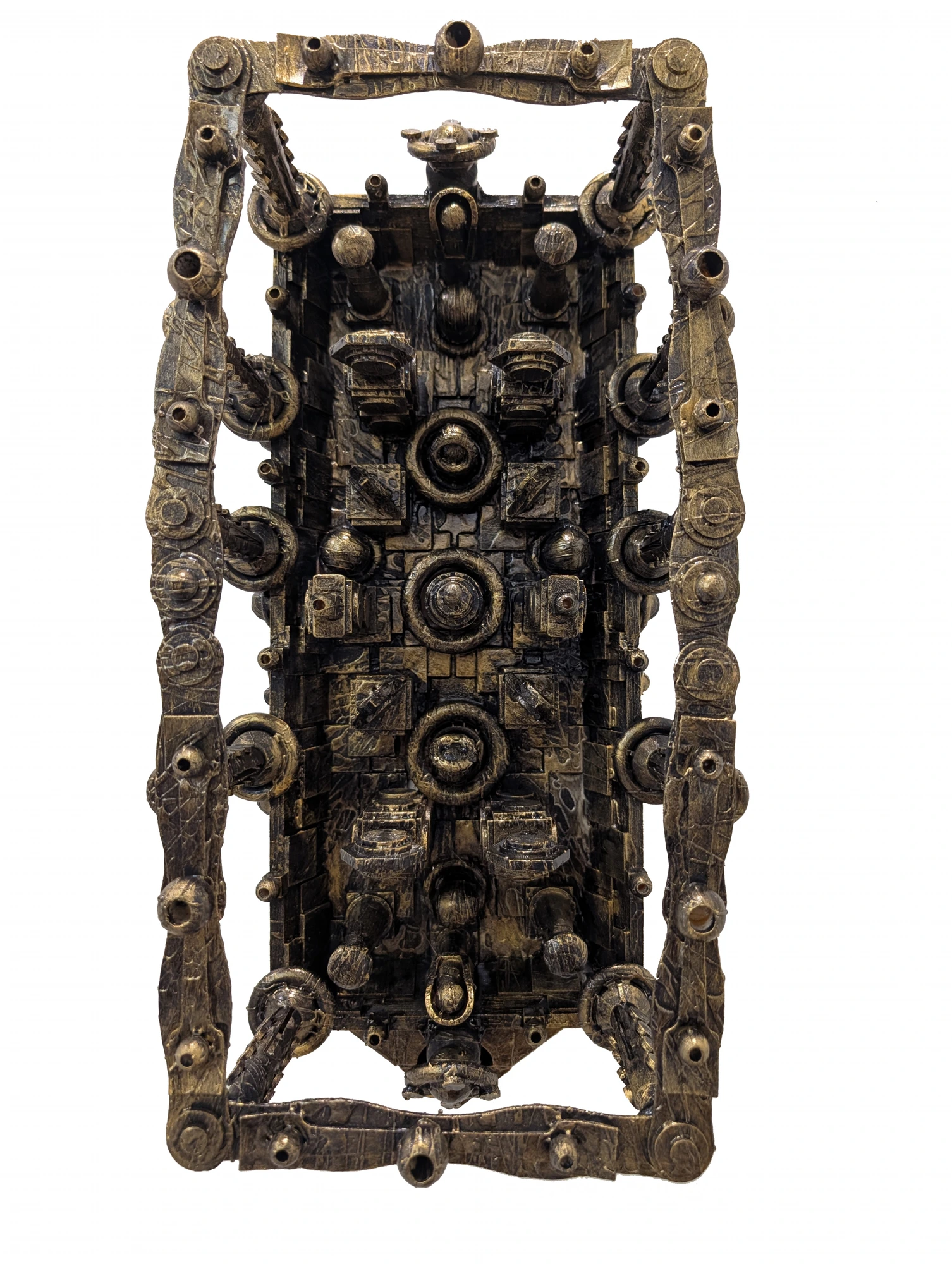
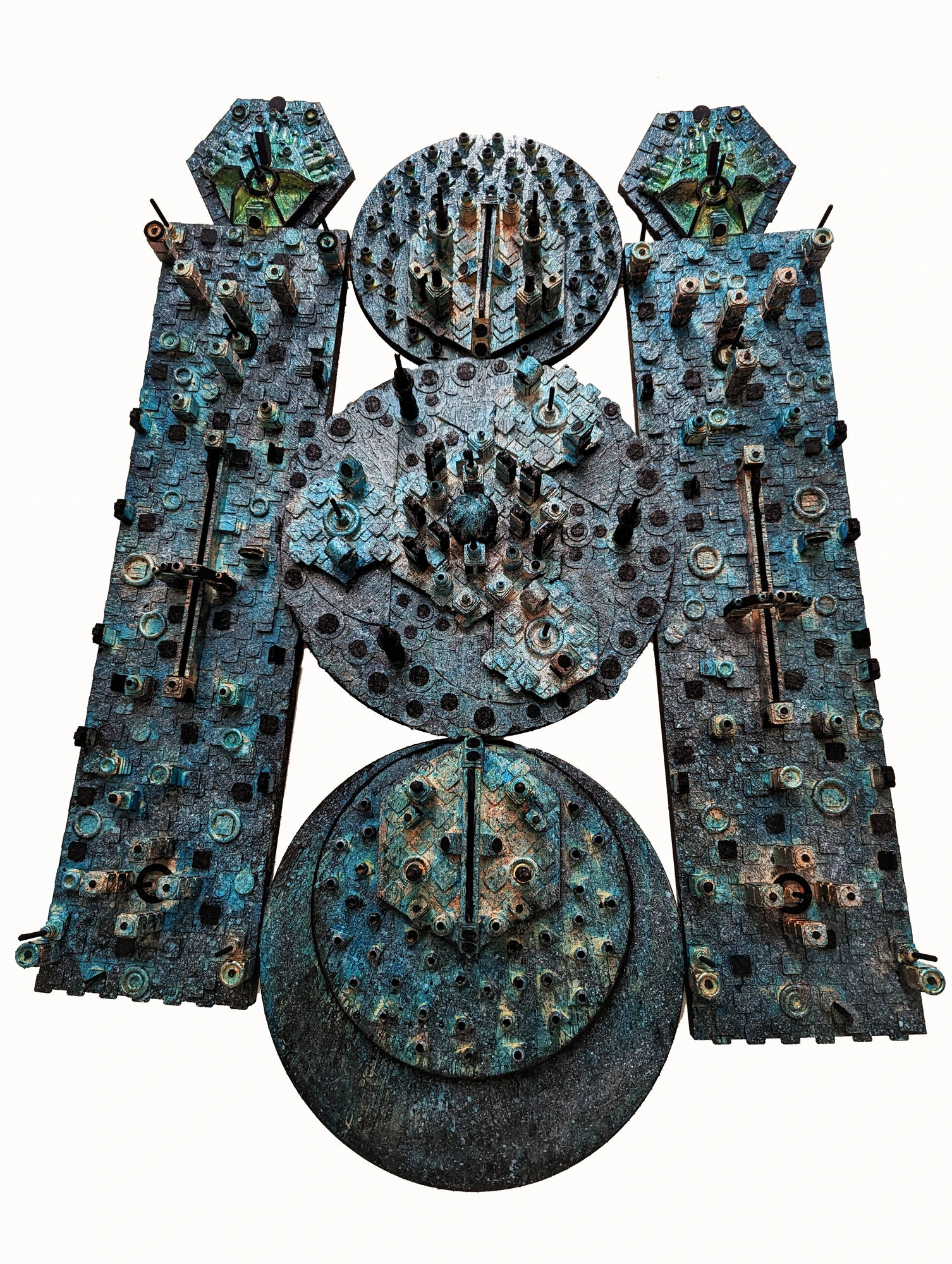
From the Black Atlantis Series — a temple structure in mixed media on wood, its colonnaded form rising like sacred architecture recovered from beneath the sea. Aged bronze tones carry the memory of the passage beyond, where monument becomes vessel and vessel becomes home.
From the Black Atlantis Series — a patinated relief in verdigris and metal leaf, its layered surface recalling monumental architecture weathered by water and time. A passage into civilizations lost and remembered.
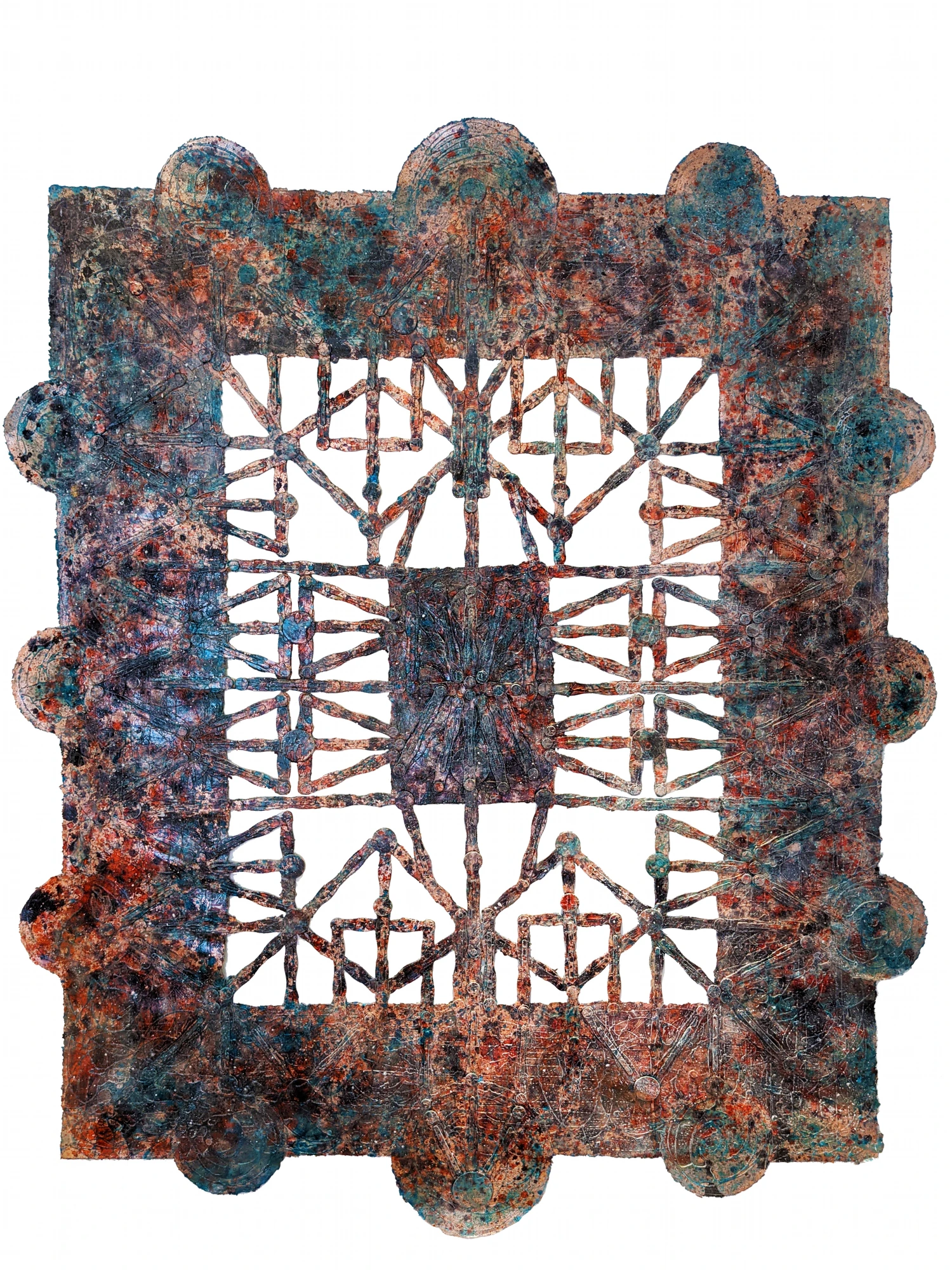
An intricate lattice in copper and teal — hand-worked paper opened into lace, its grid of forms mapping streets, circuits, or constellations. Title and details to be confirmed with the artist.
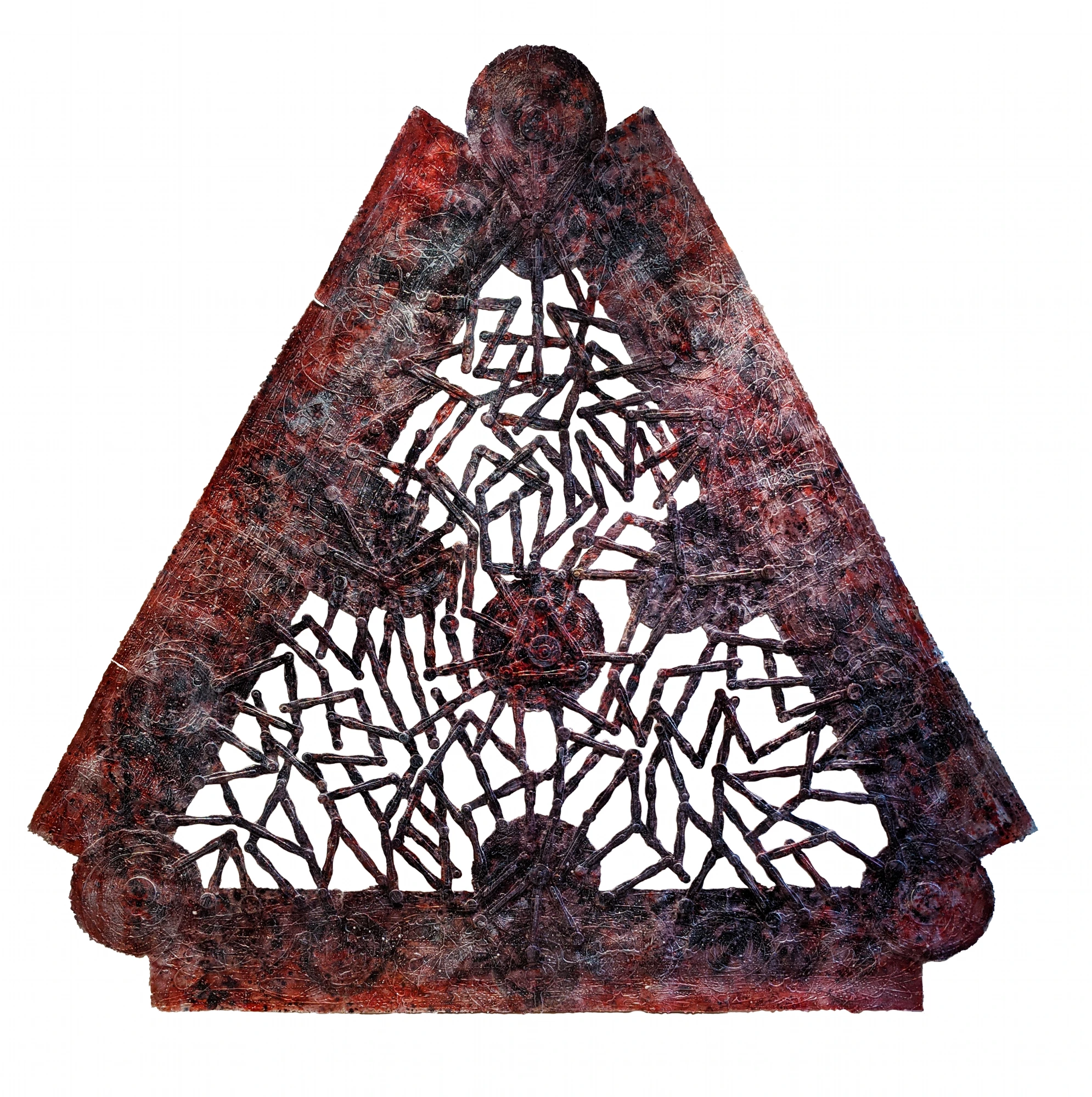
A triangular lattice in deep red and charcoal — pyramidal, like a passage or a crown, its openwork structure holding figure and void in balance. Title and details to be confirmed with the artist.
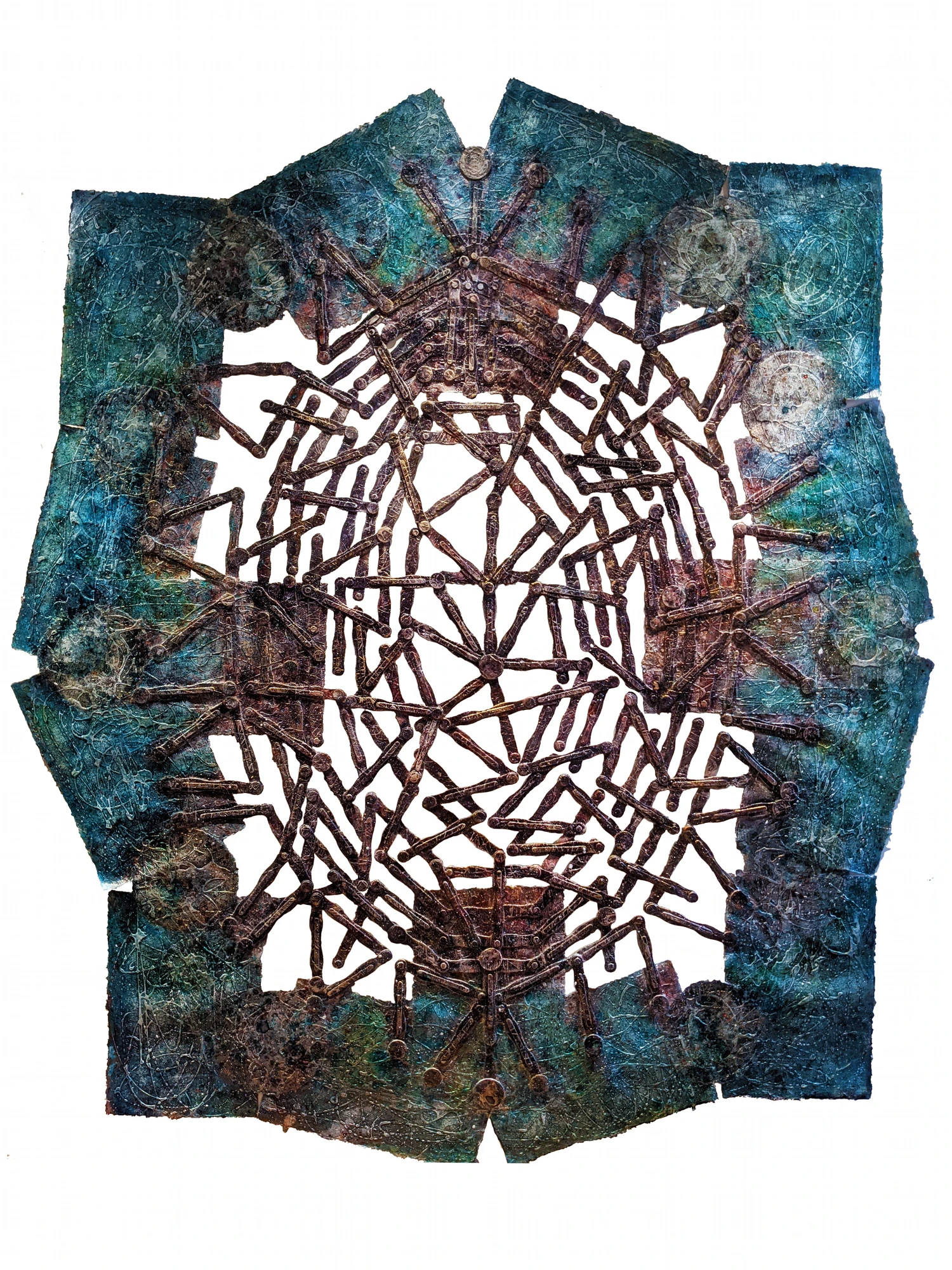
A lattice of oxidized copper on teal — openwork that lets light itself become part of the composition, ancient pattern meeting industrial memory. Title and details to be confirmed with the artist.
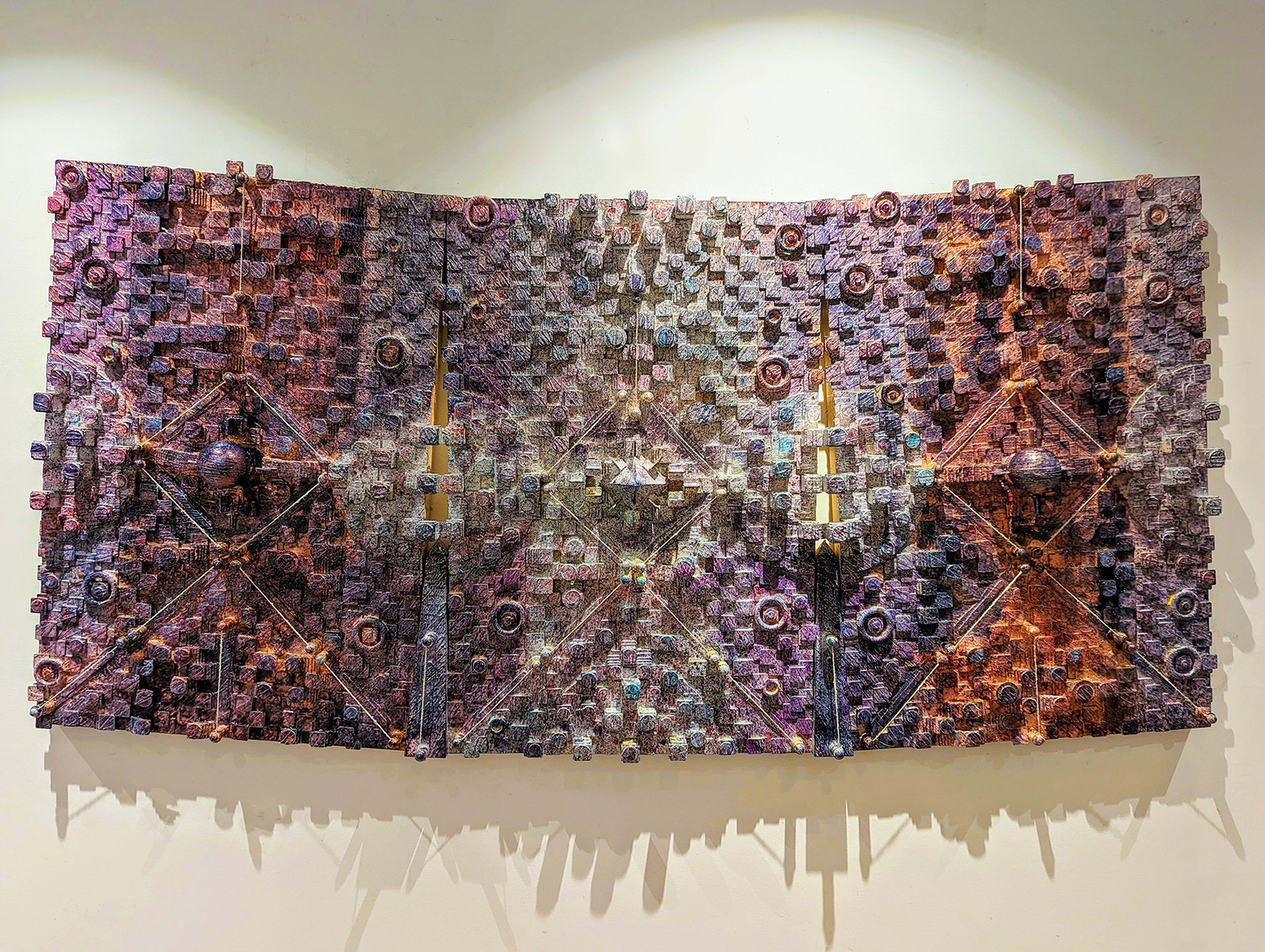
A triptych of three obelisks crowned with pyramidions — the golden capstone of the first life. Thousands of hand-cut wood elements rise across three panels in violet, copper and silver, strung with lines of force like an ancient power grid. Views include the work installed and in progress in the studio.
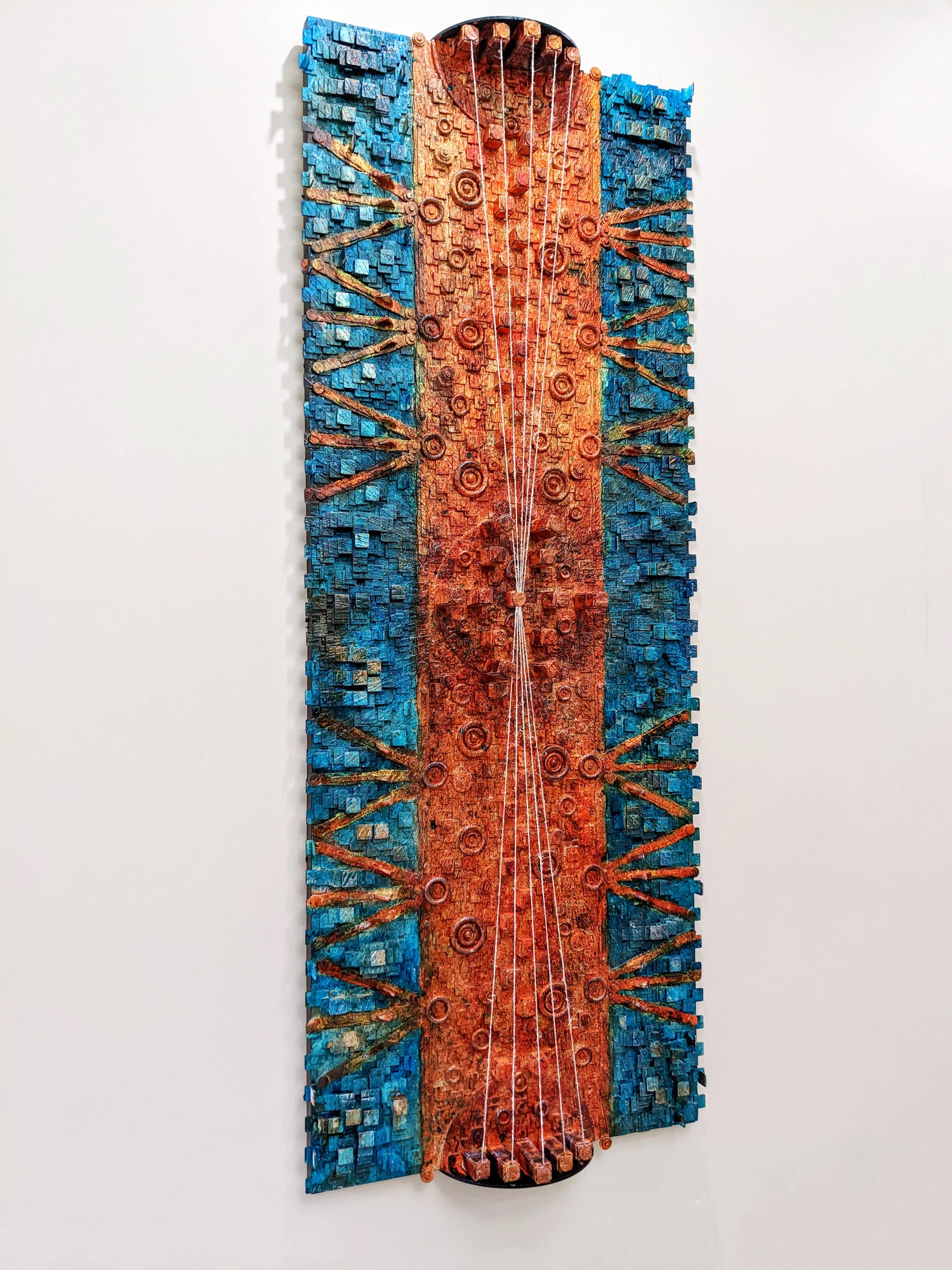
A vessel of passage strung like an instrument — a copper-orange body of hand-set wood pieces flanked by wings of mosaic blue, its taut strings carrying light-matter toward untraveled paths. Views include the gallery installation, a close-up of the strings, and the work in progress in the studio.
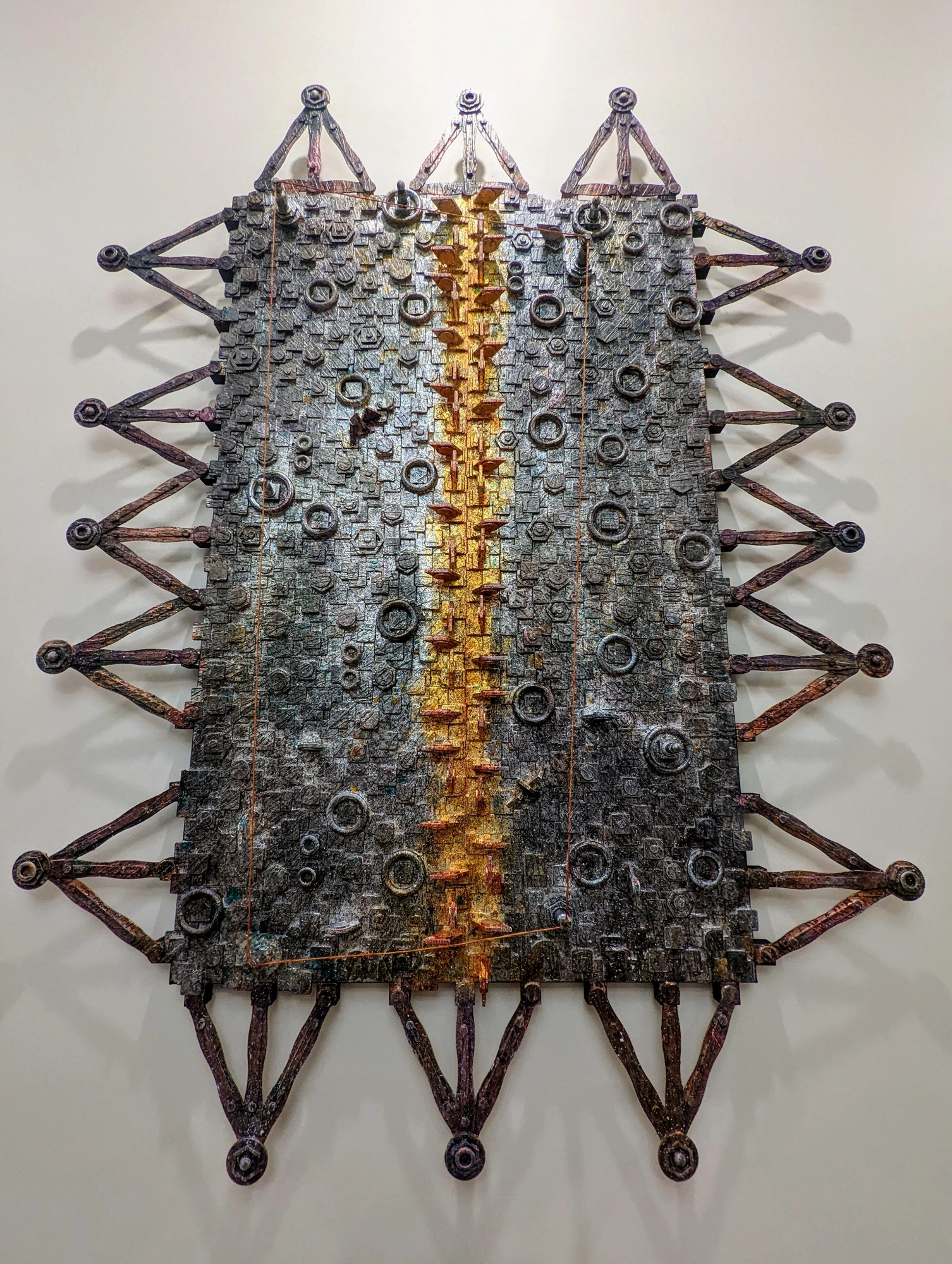
The Kingdom of Dahomey seen from above — fortress lace: walls and courtyards traced in gold on a dark ground, radiating outward from the seat of power. Defense rendered as ornament, ornament as defense.
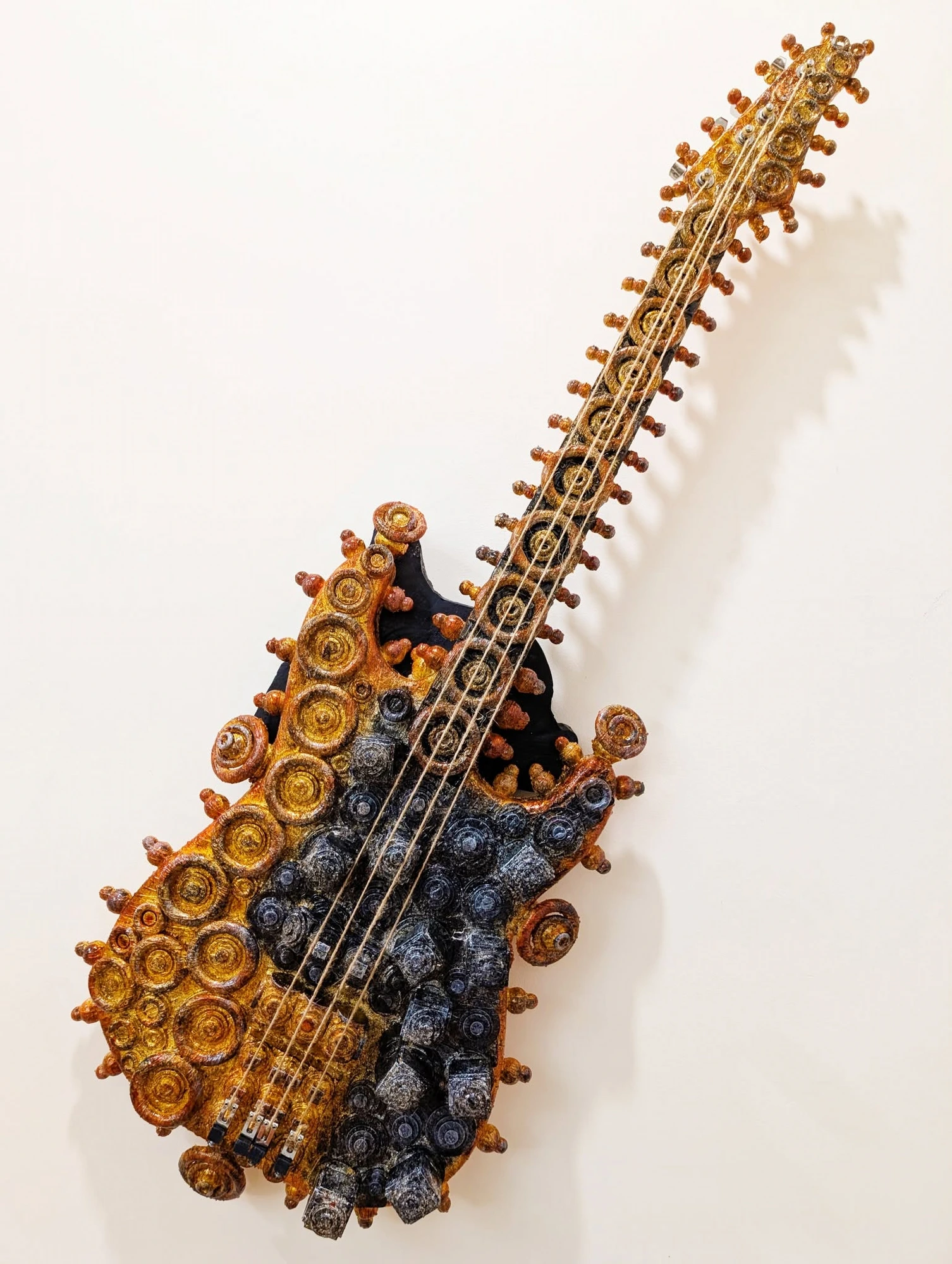
Dedicated to Marcus Miller — a Sire V5 bass rebuilt as monument. Hundreds of hand-turned wooden forms, rings and blocks gilded and patinated in amber, copper and graphite; each element placed like a note. Views include the studio, the installed work, and the piece in progress.
The first of the Black Civilizations Series — a gathering of presences in red oxide, turquoise and studded black. Three circular forms rise like ancestors assembled in council, while metal leaf catches the light across a surface dense with memory.
A radiating constellation of gilded and patinated elements, evoking the great amphitheater of El Jem — every strut and rivet turning outward from a single heart, like tiers of stone around an arena. The criterion revealed: civilization measured not by conquest, but by what it builds to gather people together.
Alkebulan — the ancient name for Africa. A sarcophagus in gold and ivory: gilded hexagonal and circular forms sealed in precious metal upon a textured silver ground. A burial chamber that is also a beginning — the dawn of ancient civilizations, entombed and eternal.
Reimagines the Lukasa memory board of the Luba people as a contemporary mnemonic device — an interface where ancestral knowledge is preserved, activated, and projected forward. Memory as an active, living force: the past, fully realized, is a technology for the future.
The third Lukasa board — an ancestral data recovery protocol. Colored nodes and crossing channels map knowledge held in the body rather than the cloud: each ring a life, each crossing a transmission, the memory board as the original database.
A portal radiating between two histories — the Doorway of No Return that took, and the Doorway of Return that brings home. Gilded rays burst from a patinated ground while below, the door stands open: hope built by hand, element by element.
A reassessment of 1897 — the year the Benin Empire fell and its bronzes were scattered across the world. Countless gilded elements, ringed by a dark studded border, reassemble what was taken: memory returning as monument.
The great walls of Benin — among the largest man-made earthworks in history — rebuilt as high technology: a hundred-inch triptych in bands of crimson, gold and living green, its hand-set elements reading like circuitry. The wall as circuit, the circuit as memory.
The pyramid as engine, not tomb. In copper red and patinated blue, thousands of hand-set elements ascend like the circuitry of an ancient city — Africa's civilizations read as high technology, a knowledge system built to endure.
The second Pyramid City — the same ancient circuitry rendered in burnt orange and umber. Two towers, one knowledge: the paired doorways of technology and tradition, each element placed by hand like stone upon stone.
From the Black Atlantis Series — a temple structure in mixed media on wood, its colonnaded form rising like sacred architecture recovered from beneath the sea. Aged bronze tones carry the memory of the passage beyond, where monument becomes vessel and vessel becomes home.
An intricate lattice in copper and teal — hand-worked paper opened into lace, its grid of forms mapping streets, circuits, or constellations. Title and details to be confirmed with the artist.
A triangular lattice in deep red and charcoal — pyramidal, like a passage or a crown, its openwork structure holding figure and void in balance. Title and details to be confirmed with the artist.
A lattice of oxidized copper on teal — openwork that lets light itself become part of the composition, ancient pattern meeting industrial memory. Title and details to be confirmed with the artist.